

1. Home
  2. »
  3. Play therapy
Integrative care, explained simply

For children — a room that belongs to them.

Play therapy for children aged 3–12, at our clinic in JLT, Dubai. A quiet, private room where the child leads. Parents are part of the work, and we walk the whole thing with you.

Not sure where to start?

Tell us what’s going on and we’ll match you to the right psychologist.

Fit comes before method
What play therapy actually is

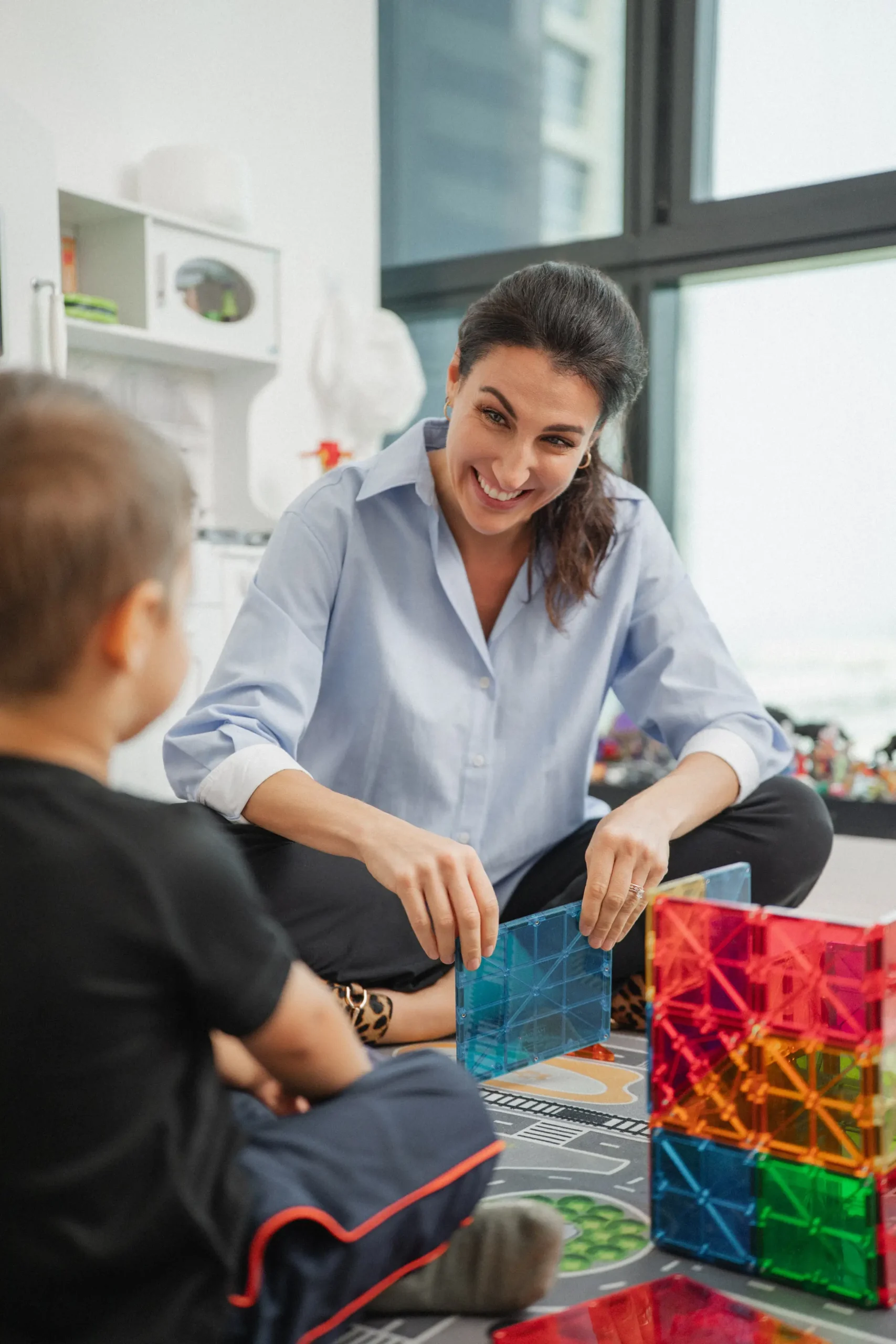
Children don’t describe their inner world in words. They show it through the toys they choose, the stories they build in the sand tray, the drawings they don’t explain. Play therapy is the professional practice of paying close attention to that showing, and helping a child find their way through something that has become too big to carry. Our approach is relational: the room is safe, the child leads, and patterns emerge over the sessions that the therapist gently helps the child put shape and meaning around.

“Mental health, for a child, means safety and being heard and understood. Play therapy is a way of doing that in a language a child already speaks.”
— Lily Peterson, our lead child & adolescent psychotherapist

The approaches we use

Who play therapy helps

Most parents book because something has been going on for longer than they can explain, and the usual approaches have stopped working. The shapes we most often see:

01

Anxiety and separation

Bedtime battles, returning nightmares, bedwetting after months of dry nights, school drop-off that has become impossible. Play-based work lets the child encounter and re-shape fears through play — not through a conversation they aren't developmentally ready to have.

02

Big tantrums, boundary-breaking, defiant patterns

The child who is rude, aggressive with siblings, keeps testing limits. Teachers complaining. Weekends overwhelming. The behaviour is almost always a signal — attachment, over-stimulation, an unspoken loss , and play therapy is how we find the underneath.

03

School refusal, focus, friendship difficulties

A child who no longer wants to go to school. A drop in focus that came out of nowhere. Friendship dynamics that have turned. Often what looks academic is actually social, and what looks social is actually emotional.

04

Attachment, loss, and family transitions

A new sibling, a move to Dubai, parental separation, the loss of a grandparent or pet, adoption, a parent's illness. Any of these can arrive later as a symptom nobody has connected back to the transition itself.

How it works

What a session looks like

01

From the child's point of view

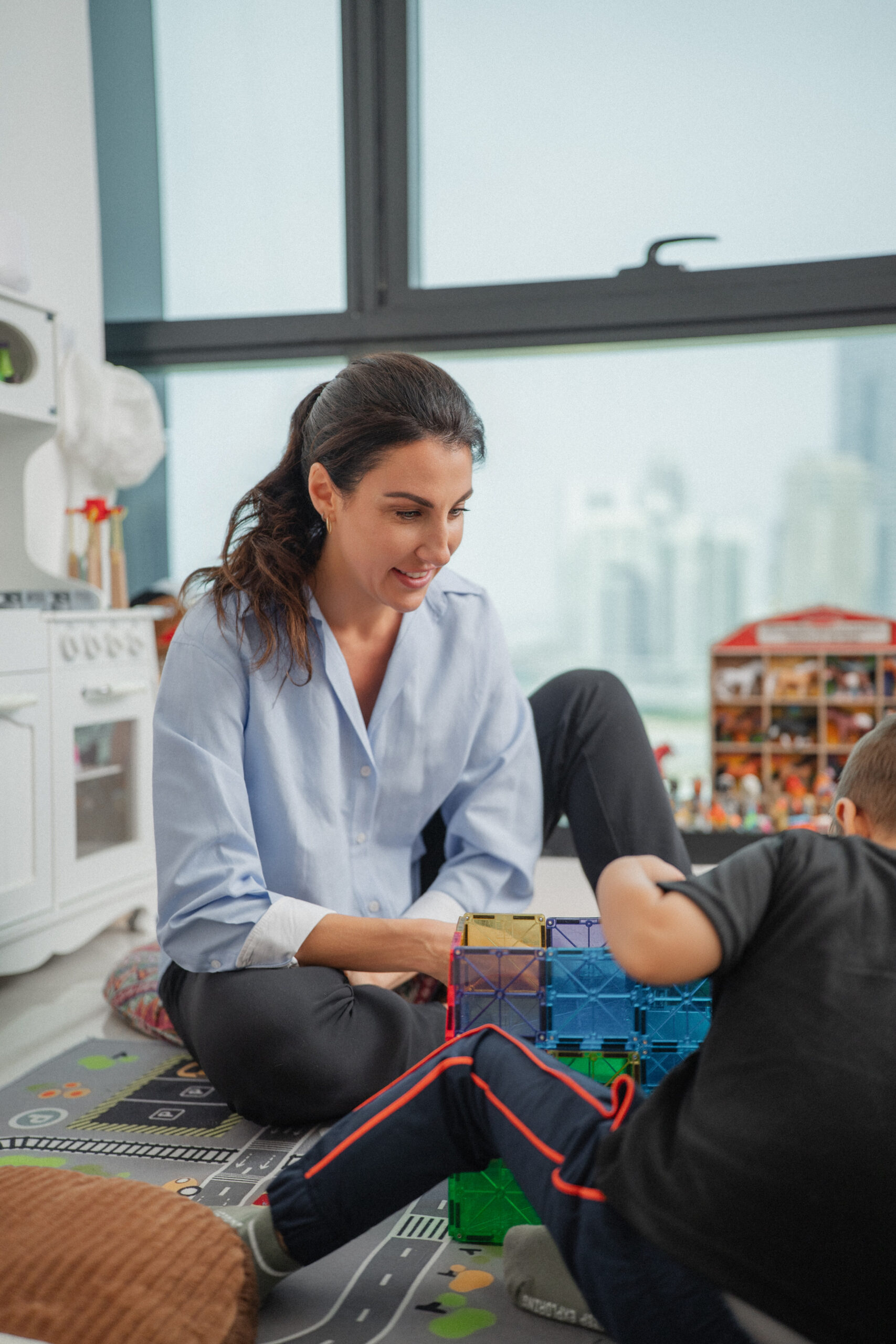
The child arrives in a playroom set up for them: sand tray, small figures, art materials, soft seating. The therapist tells them clearly: this is your time, you decide what we do with it. They can play, draw, sit and say nothing, or talk. All of it is welcome and held with confidentiality appropriate to their age.

02

From the parent's point of view

Session one begins with the parents alone — the concern, the history, the family shape. From session two onward, sessions are the child's, with a parent check-in every four sessions. Parents are part of the work, not observers — children don't exist in isolation, and we help you translate what we're seeing into practical support at home.

A

A meta-analysis of 93 studies found play therapy has a large positive effect for children — because meeting a child in their own language works.

The practical things

Before you begin

Common questions about play therapy

At home, play is the child’s own world. In play therapy, the therapist is a trained presence inside that world — noticing patterns and helping the child put shape around them. The play looks similar; what the therapist does with it is what makes it therapy.

It depends as every child is unique. We recommend a minimum of 6-12 sessions. Deeper attachment or trauma work usually takes longer. We discuss the trajectory every few weeks so you always know where we are.

This is common, especially with older children and teens. The first session is designed for it — the room is theirs, no pressure to talk. Many reluctant children get interested in toys and participate in play. If a child continues to refuse, we discuss whether the timing is right or whether a different approach would suit them better.

Not verbatim. What we share are themes, patterns, and practical suggestions for support at home. Specific confidences are held with the confidentiality appropriate to the child’s age, unless there is a safeguarding concern — which we would always tell you about.

It can support the emotional side of living with any of these — anxiety, self-image, family dynamics. It is not a substitute for an assessment or for the specific interventions those conditions call for. If we think an assessment would be a useful first step, we will say so. We run assessments in-house.

Most parents who book us have been holding something for months longer than they should have had to.

If any of this sounded like the room your family has been in, we would rather have a fifteen-minute conversation with you than let you keep carrying it alone.

Let’s design support that actually works.